Meeting Plan – Campsite Sustainability Assessment
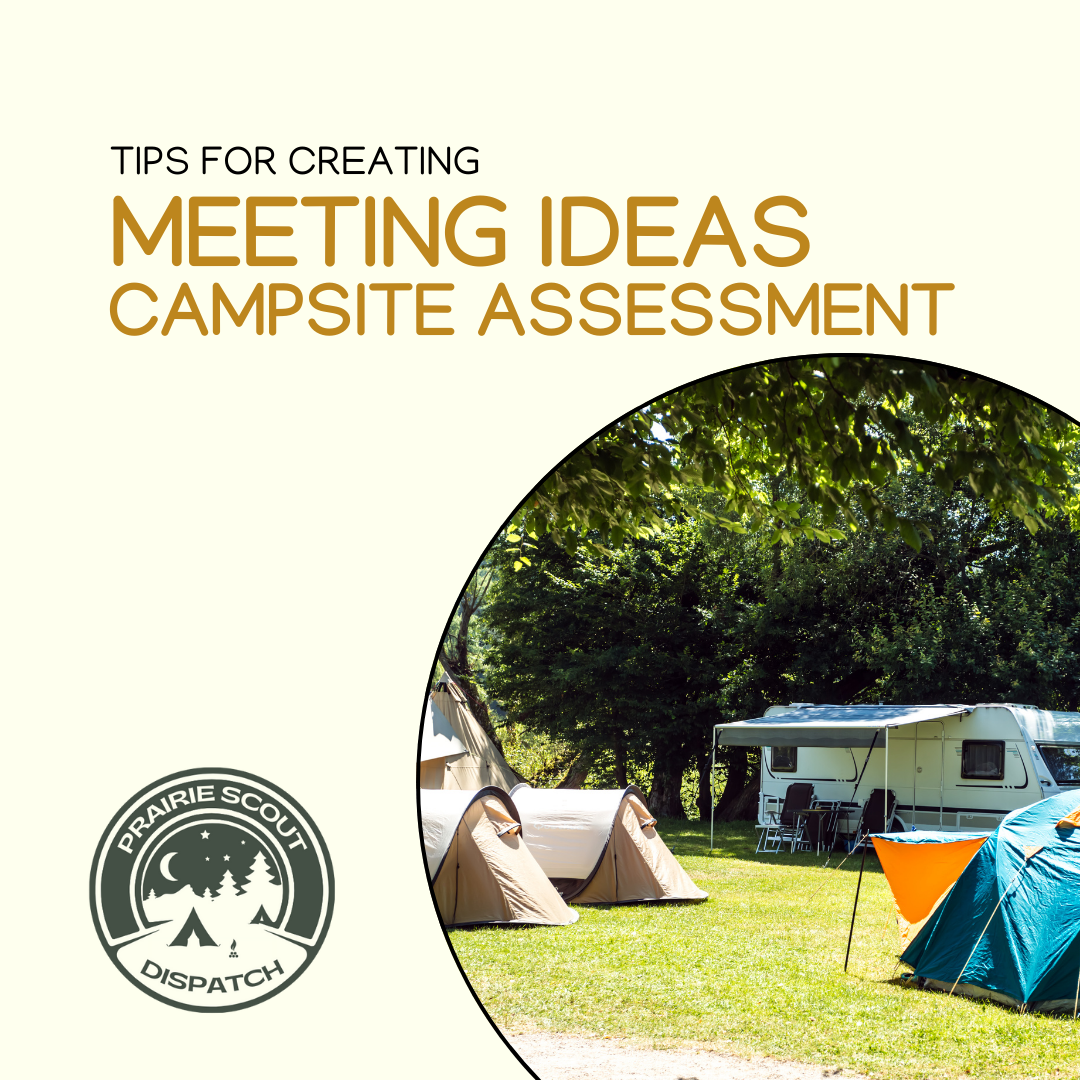
Scout Meeting Plan: Campsite Sustainability Assessment
Theme: Environmental Stewardship and Leave No Trace
Age Group: Scouts
Duration: 75–90 minutes
Objective: Teach scouts how to assess the environmental impact of a campsite and make responsible decisions to protect natural spaces
Opening (10 minutes)
- Opening ceremony or flag break
- Scout Promise or Law
- Introduction to campsite sustainability and why it matters
- Review expectations for respectful behaviour outdoors
Sustainability Basics (15 minutes)
Leader-led discussion covering:
- What makes a campsite sustainable
- Human impacts on soil, plants, wildlife, and water
- Overview of Leave No Trace principles
- The idea of “leave it better than you found it”
Campsite Assessment Activity (35–40 minutes)
Divide scouts into patrols and assign each group an assessment area.
Each patrol evaluates:
- Ground conditions and signs of erosion
- Vegetation damage or trampling
- Evidence of wildlife disturbance
- Fire impact and fire pit condition
- Litter, food waste, and micro-trash
- Proximity to water sources
Provide a simple checklist or scoring sheet to guide observations.
Patrol Discussion and Recommendations (10–15 minutes)
Each patrol discusses:
- What sustainability concerns they identified
- What actions could reduce impact
- Whether the site is suitable for future use
Patrols prepare one or two practical recommendations to share.
Group Share and Reflection (10 minutes)
Bring the group together to:
- Share findings from each patrol
- Compare observations
- Discuss how better choices protect campsites for others
Closing (5 minutes)
- Summary of key sustainability lessons
- Announcements or next steps
- Scout closing or friendship circle
Materials Needed
- Clipboards and pencils
- Sustainability checklists
- Maps of the campsite
- Gloves and garbage bags for optional cleanup
Leader Notes
- Encourage observation without judgement
- Emphasize learning, not criticism
- Adapt the assessment for age and experience
- Ensure scouts remain within designated boundaries
Variations
- Compare a high-use and low-use campsite
- Repeat the assessment after a camp to measure impact
- Tie the activity to a service project or badge requirement